

Sound Transit's two newest light rail stations are open, and they're changing how Seattle connects East to West
Seattle has always been a city divided by water, and for a long time, getting from one side of Lake Washington to the other meant a car, a bus, or a whole lot of patience. That changed on March 28, when Sound Transit opened two brand-new 2 Line stations: Judkins Park in Seattle and Mercer Island. It's a big deal, and not just for commuters.
Judkins Park: A Station That Fits the Neighborhood
Nestled between the Central District and Rainier Valley, the Judkins Park station feels like it was designed with the surrounding community in mind. It has two entrances that work with the natural hillside terrain, one up top near Jimi Hendrix Park, and one lower down along Rainier Avenue South. From the upper entrance, you're steps away from the Northwest African American Museum, Judkins Park playfields, a spray feature, and trails. It's a transit hub that doubles as a genuine neighborhood anchor.
Bus connections here are strong too. The Route 48 runs directly into the Central District toward Washington Middle School and Garfield High School, and the Route 7, which carries about 11,000 passengers daily, creates a seamless transfer option between Rainier Valley and the Eastside. Cyclists aren't left out either: both station lobbies connect directly to the Mountains to Sound trail along I-90.
The art is worth lingering over. Seattle artist Barbara Earl Thomas, who grew up in South Seattle, created cut-paper portraits of author Charles Johnson and playwright August Wilson that were translated into steel and glass throughout the station. And at each entrance, large halftone portraits of Jimi Hendrix by New York artist Hank Willis Thomas serve as unmistakable landmarks.
Mercer Island: "The Rock" Opens Up
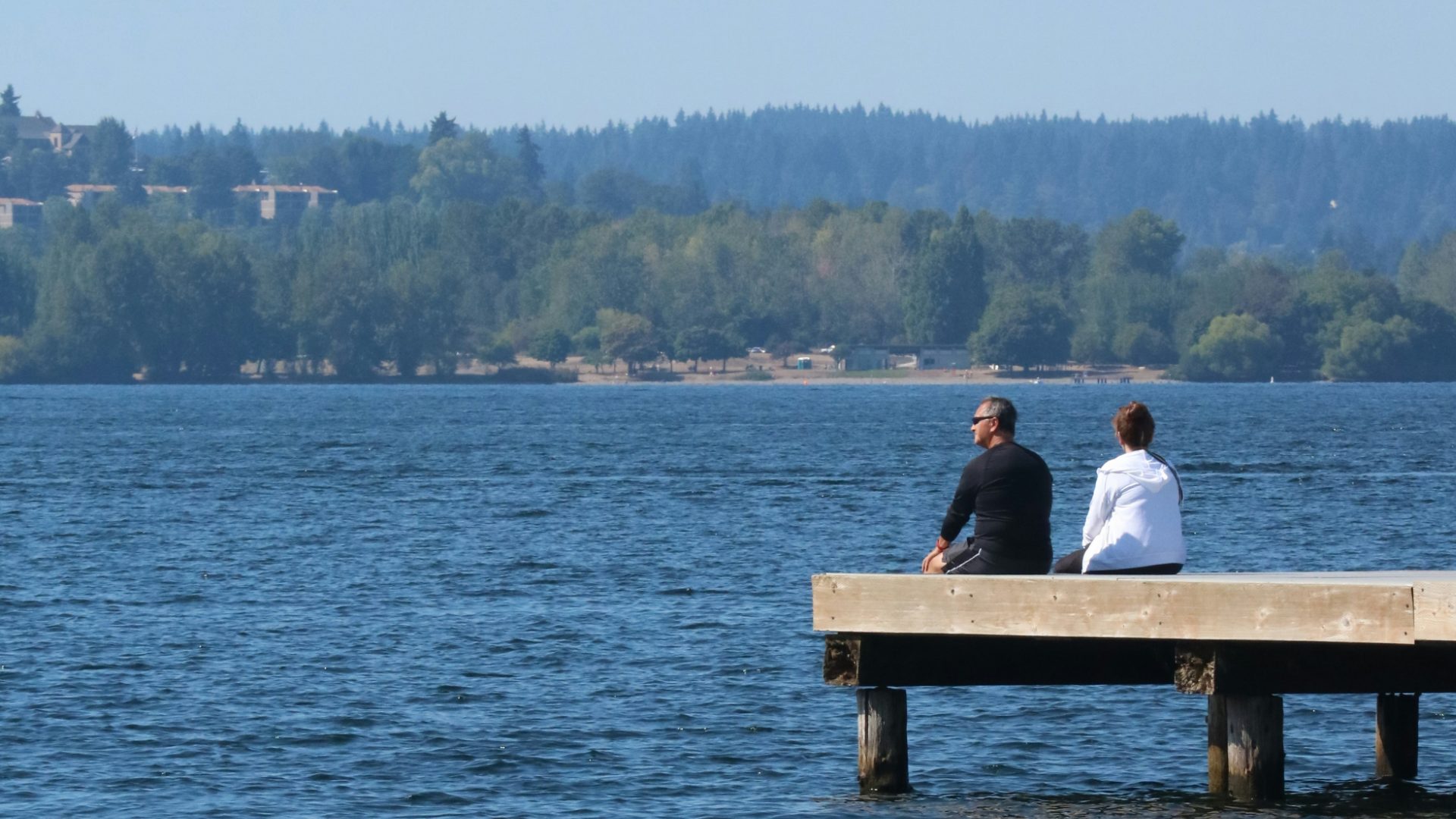
Mercer Island has long had a reputation as a tight-knit, somewhat tucked-away community of about 25,000 people. Light rail changes that. The new station sits at ground level near the island's small downtown, in the median of I-90, making it walkable for residents of nearby midrise apartments. From here, riders can reach the University of Washington in about 27 minutes, or hop east to downtown Bellevue in just 10.
The station has its own sense of character. Seattle artist Beliz Brother installed a canoe frame and oars over the entrances, a nod to how islanders got around long before the first floating bridge in 1940. Curving sidewalks, landscaping, and a passenger drop-off zone give the entrances a calm, considered feel.
A heads-up for drivers planning to park and ride: the garage is already mostly full from bus commuters alone. If you're coming from Issaquah, Factoria, or Renton, South Bellevue Station off I-405 and I-90 is your better bet, with over 1,500 stalls available.
What It Means for the Broader Region
Both new stations feed into International District/Chinatown Station in Seattle, which has now become the region's central transfer hub. This is where the east-west 2 Line meets the north-south 1 Line, connecting 58 track miles of rail. If you're heading to the airport or Rainier Valley, you'll transfer here to a southbound 1 Line train. New elevators and escalators are being added, though the station's original 1990 brick plaza is still awaiting a longer-overdue renovation.
For anyone paying attention to Seattle real estate, all of this matters. Transit access consistently influences where people choose to live, what neighborhoods feel more connected, and where density tends to follow. Judkins Park and Mercer Island are already seeing more multifamily development nearby, and that pattern tends to continue as ridership builds. Worth watching.
This post was based on information found in The Seattle Times.


Windermere Real Estate / Capitol Hill, Inc. proudly serves buyers, sellers, and real estate agents throughout the Greater Seattle area.
© 2026 Windermere Real Estate/Capitol Hill, Inc.


