

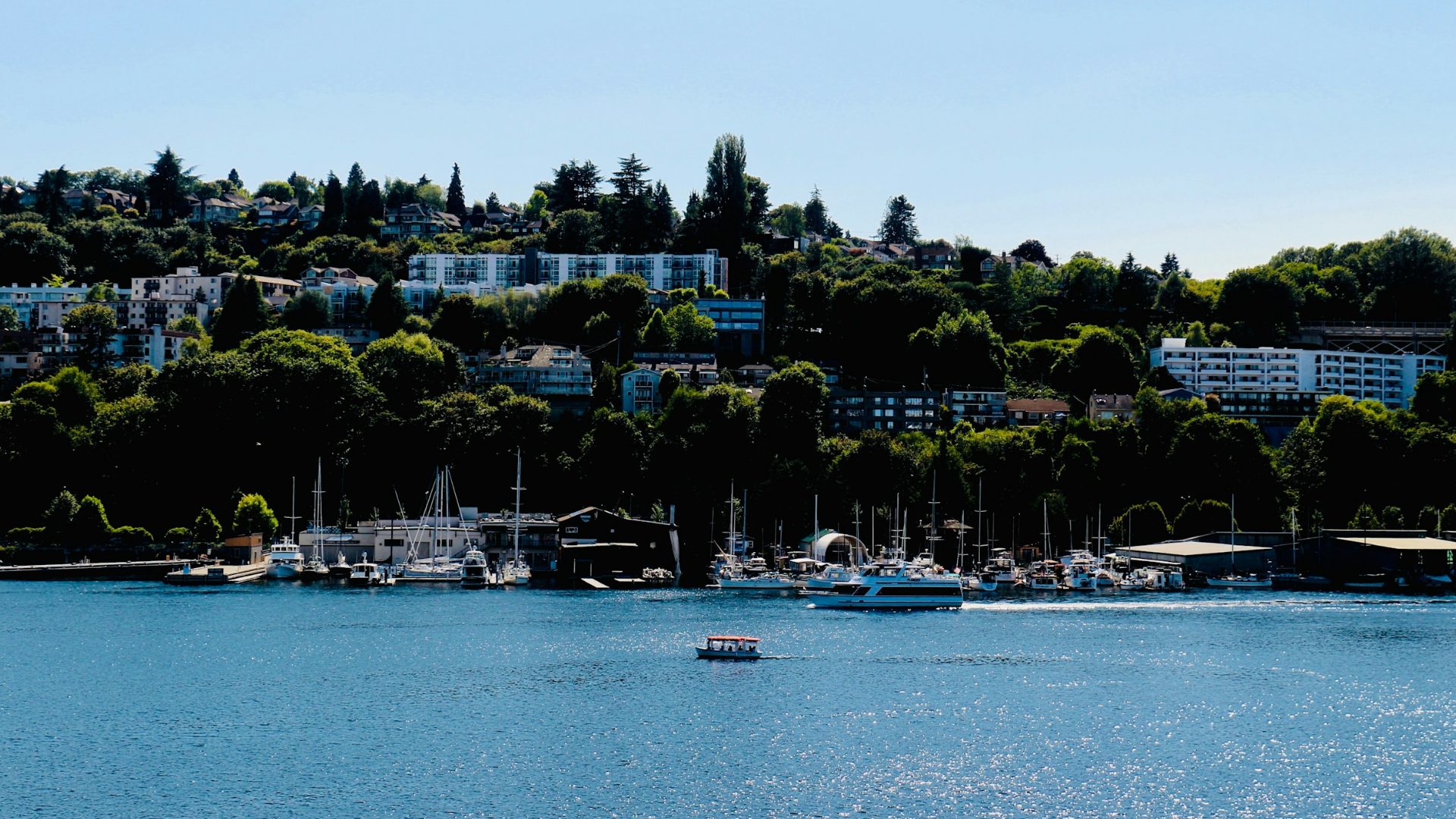
Seattle's Floating Homes: A History
If you've ever walked along Lake Union and spotted a row of charming floating homes reflected in the water, you've witnessed one of Seattle's most distinctive housing traditions. But long before floating homes became a bucket-list Seattle experience, they were scrappy, storm-battered shelters for working-class laborers, and their road to respectability was anything but smooth.
Seattle didn't invent the floating home, but the city made it its own. In the early days, you can credit (or blame) the timber industry. Skilled woodworkers who were eager to stretch their wages started building modest floating structures along the city's many waterways in the 1880s. By the 1920s, Seattle had roughly 2,500 floating homes spread across its lakes and shorelines, making it a surprisingly significant slice of the city's housing stock. These weren't luxury pads. They were practical, sometimes rickety, and often home to seasonal workers, those sidelined by the Depression, and a fair number of Wobblies (the radical labor organizers of the era).
As the decades passed and Seattle's waterways cleaned up, tension started brewing between floating home residents and landowners who had their eyes on prime waterfront real estate. The houseboats' scrappy, free-spirited reputation worked against them, and by the 1950s and 60s, many residents were evicted to make way for new development. The floating home population shrank dramatically, dropping to around 450 by 1970.
What survived that wave of displacement was something genuinely interesting: a small, tight-knit community of floating homes with their own eccentric architectural identity. Local architect and University of Washington professor David Miller described them well: builders tried to adapt design elements meant for uneven hillside sites and apply them to a flat raft, which resulted in structures that are, as he put it, "weird, eclectic, idiosyncratic versions of the Northwest style." In other words, they're one-of-a-kind, and that's kind of the whole point.
The community got a bit more stability in 1968 when the city council passed an ordinance regulating new construction and remodels for floating homes, and they were officially recognized as a "preferred" use of Seattle shorelines in 1987. It wasn't a perfect road, since the 1968 standards were actually too costly for some residents and contributed to further attrition. But the protections that did take hold helped preserve what we see today.
And then, of course, there was 1993. When "Sleepless in Seattle" dropped and Tom Hanks' character called a Lake Union houseboat home, floating homes officially crossed over from local curiosity to cultural touchstone. The house featured in the film became a tourist destination, and Seattle's floating home community gained a national profile that has never really faded.
Today, Seattle limits new floating home applications to those built before July 2014, which means the existing stock is genuinely finite and continues to be sought after. Whether you're drawn to a funky studio on the water or a beautifully updated modern floating home, the community offers a range of styles and price points unlike anything else in the Seattle market. They're quirky, they're charming, and they come with a history that most Seattle homes simply can't match.
This post was based on information found on Seattle PI.



Windermere Real Estate / Capitol Hill, Inc. proudly serves buyers, sellers, and real estate agents throughout the Greater Seattle area.
© 2026 Windermere Real Estate/Capitol Hill, Inc.


