

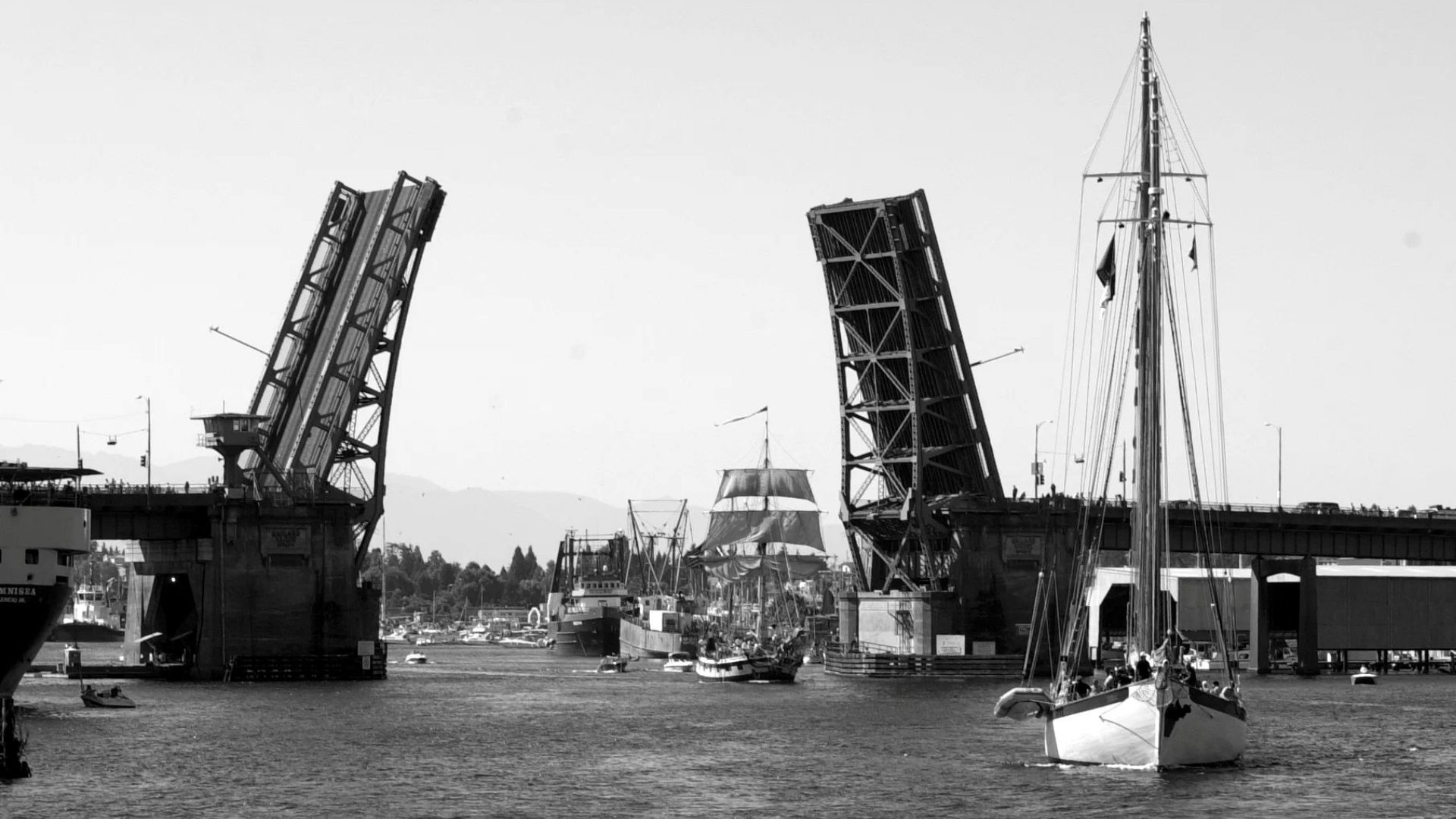
Up, Down, and Around: Seattle’s Drawbridges
From a swing bridge in West Seattle to an artist’s tower in Fremont, here’s a closer look at the bridges that shape our neighborhoods.
Meet the Bridges That Keep Seattle Moving
If you’ve lived in Seattle for any length of time, you’ve probably found yourself sitting at a lowered gate, watching a sailboat glide past while traffic waits. Living in a city shaped by water means boats and cars have to share, and our movable bridges are how we make that work.
There’s a Person Behind Every Opening
Seattle’s drawbridges aren’t automated, and that’s on purpose. With so many people walking and biking across, SDOT keeps a real person at the controls. At the Fremont Bridge, that person has been Jared Hickman for 18 years. From a small tower office reached by two flights of century-old metal stairs, he raises the bridge using a seven-button panel that looks a lot like an airplane cockpit. After nearly two decades, very little surprises him, though he notes that a couple of overly confident sailboats still manage to hit the bridge every year.
SDOT has 22 full-time operators across the four bridges it manages, and many of them stay for the long haul. For bridge operations manager Greg Silcox, the connection goes back generations: his grandfather helped build the Fremont Bridge as a teenager.
How They Work
Most of Seattle’s drawbridges are bascule bridges, which work like a seesaw. Massive counterweights below the deck swing downward, lifting the road panels up and out of the way. The braking systems are computerized today, but the core design dates back to the early 1900s.
Boats can request an opening between 7am and 11pm, and overnight openings are by appointment. Marine traffic generally has the right of way, except during peak commute hours. Most openings hold up road traffic for 10 to 15 minutes. One of the busiest days of the year? Boating Opening Day, the first Saturday in May.
In 2025, Fremont led the city with 4,134 openings, followed by Ballard, the University Bridge, and the Spokane Street Swing Bridge.
Bridges With Personality
-
- The Fremont Bridge (109 years old) wears the blue and orange colors Fremont residents voted for in 1985, and over a million bikes and scooters crossed it in 2025. Its northwest tower, home to a neon Rapunzel, now hosts artists each summer through a city arts program.
- The Ballard Bridge (109) has been on the National Register of Historic Places since 1982.
- The University Bridge (107), connecting the U District and Eastlake, is the bridge most likely to get stuck in summer heat. When temperatures reach 85 degrees, crews spray the city’s drawbridges with cool water to keep the metal from expanding.
- The Montlake Bridge (101) features Gothic details to match the UW campus and offers a front-row seat to the Windermere Cup rowing races.
- The First Avenue South Bridge carries SR 99 over the Duwamish River with two separate spans, one 70 years old and one 29.
- The Spokane Street Swing Bridge (35) is Seattle’s only swing bridge. Instead of lifting, it rotates to let vessels through and is currently in the middle of a multiyear rehab after working overtime during the West Seattle Bridge closure.
- The South Park Bridge replaced its 1931 predecessor in 2014, and a pocket park at its base displays parts salvaged from the original.
Part of the Neighborhood
These bridges do more than move traffic. They connect Fremont to Queen Anne, Eastlake to the U District, and West Seattle to the rest of the city, and they give each of those neighborhoods a bit of their character. So the next time the gates come down, take a minute to enjoy the view. Someone up in that tower is making sure everyone gets where they’re going.
This post was based on information found on Seattle Met.


Windermere Real Estate / Capitol Hill, Inc. proudly serves buyers, sellers, and real estate agents throughout the Greater Seattle area.
© 2026 Windermere Real Estate/Capitol Hill, Inc.


